Case Study
Keeping recruitment inclusive in the age of AI

About NKT
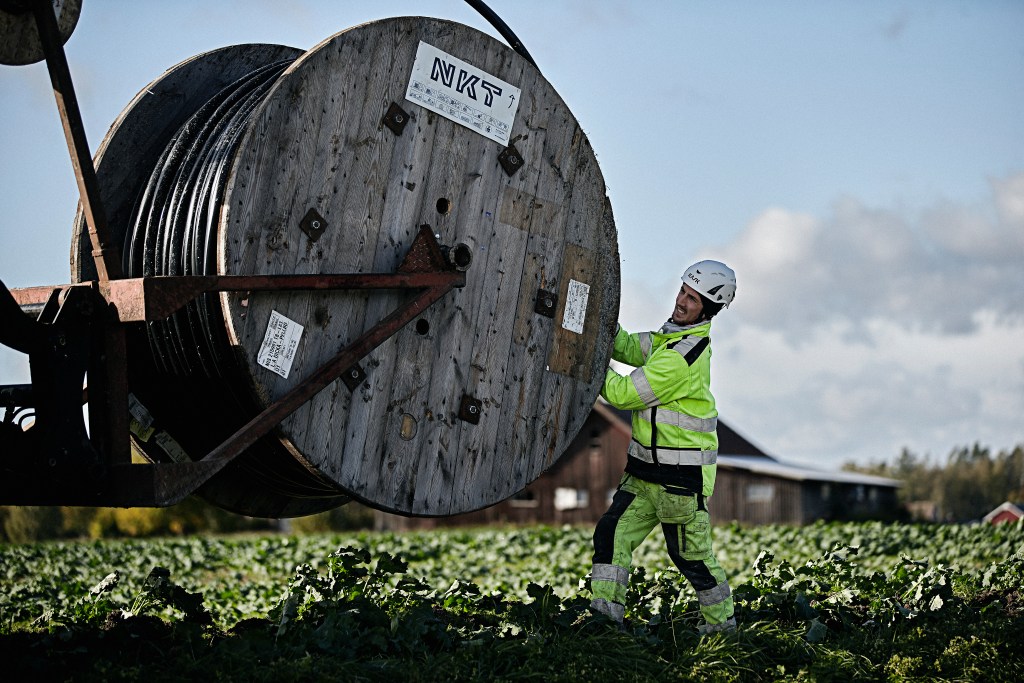
NKT connects a greener world with high-quality power cable technology. A pioneer in the cable industry since 1891, NKT designs, manufactures and installs low, medium and high voltage power cable solutions that enable sustainable energy transmission. The company is present in dozens of markets worldwide, is headquartered in Denmark and is listed on Nasdaq Copenhagen. As a fast-growing engineering company competing for technical talent across many countries, NKT set out to build a hiring process that is both more efficient and more inclusive — and to make sure that adopting AI strengthened those ambitions rather than undermining them.
The Challenge
NKT is an engineering company with high ambitions on diversity and inclusion.
When the company began working seriously on diversity and inclusion, the female new hire rate sat below 20%, and the ambition to change that was running ahead of the tools to deliver it.
“When we started to work really diligently with increasing diversity and inclusion at NKT, it was quite fluffy — like, what can we actually do?” says Josefine Persson, Head of Talent Attraction and Employer Branding at NKT. “We can promote female role models, we can do all these things. But we also needed something more concrete.”
Persson came to talent attraction from an unexpected direction — a background in business development, event management and online marketing — and she brings that lens to talent attraction. “Recruitment for me is a lot about marketing and sales; market and selling the company and the jobs to the right candidates, and even sometimes “selling” the candidates to the managers, she says. It’s a view that makes the wording of a job ad not an afterthought, but the product itself.
The second challenge was language. As a technical organisation, NKT’s job ads tended toward complexity — abbreviations, long requirement lists and dense descriptions.
“We seem to believe that we attract candidates by adding abbreviations and long descriptions of what they’ll do and how complex everything is. I believe, by doing so, we rather scare some talents away rather than attracting them. Research consistently finds that women are less likely than men to apply when they don’t feel they match everything a job ad asks for. Simplifying isn’t only about readability; it’s about who stays in the funnel.”
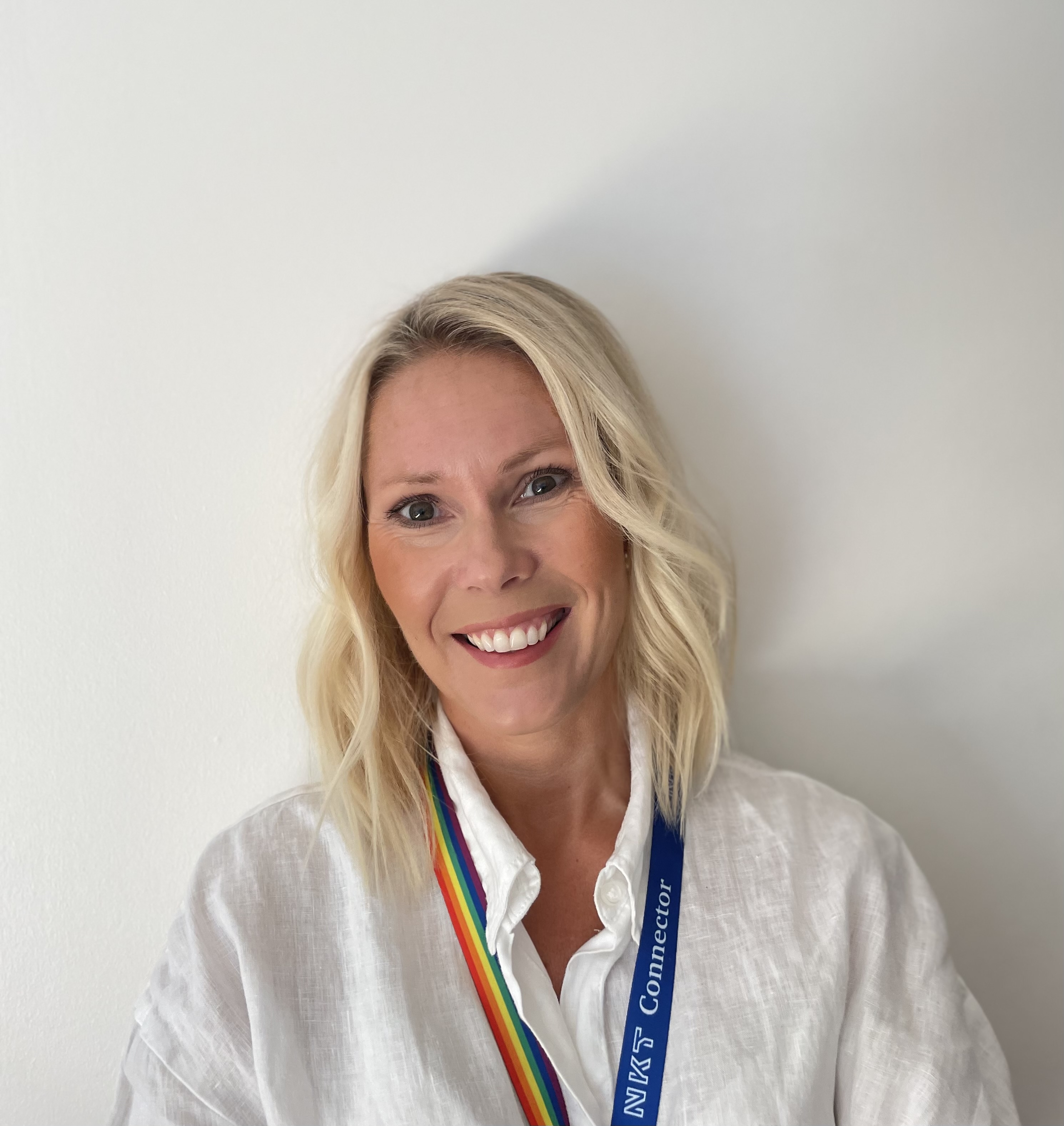
Josefine Persson
Head of Talent Attraction, NKT
NKT needed inclusive, readable job ads that held the same standard in English and every local language, because most of its global workforce doesn’t speak English as a first language.
The solution
NKT chose Develop Diverse as the tool to identify and replace words and phrases that can be perceived as exclusionary, and to bring the complexity of its job ads down.
Develop Diverse gave the recruitment team something concrete to hand to the wider business.
“This was the tool where we could say: okay, we really have something concrete that we can learn from,” says Persson. “If we use this, among our other initiatives, it will help us reach our targets. It was really good that we could show we are not just setting high ambitions — we actually live them.”
The feature the team values most is the language guidance itself. As Develop Diverse doesn’t only flag exclusionary wording but suggests inclusive alternatives — individual words and full sentences.
“Most of us are not native English speakers, so it helps us improve the language, because we’re growing our pool of words. Nowadays we also get suggestions for the whole sentence. The word proposals and the sentence proposals are a big win.”
Josefine Persson
Head of Talent Attraction, NKT
That mattered even more as NKT introduced AI elsewhere in the workflow. Around two years ago, the team began using a prompt to draft job ads from a formal job description — a change that saves roughly 1.5 hours per job and improves consistency across the company. But it came with a warning sign: when the AI-drafted ads were measured, their inclusivity score dropped sharply.
“When we started using the AI job ad creator, we realised the inclusivity score dropped dramatically,” Persson recalls. Rather than choosing between efficiency and inclusion, NKT trained HR to use AI and Develop Diverse together, and reworked the prompt. The score recovered.
The lesson NKT draws from this is central to how it now works: AI speeds the process up, and Develop Diverse keeps it inclusive. Persson is direct about why the human-plus-tool combination matters — she doesn’t accept the idea that AI is automatically fairer.
“You can argue that AI is less biased than a human, but I somewhat disagree, because AI is also biased as it is originally based on our input,” she says. “A combination is really the best.”
The result
NKT has high ambitions when it comes to diversity,” says Persson. Working with Develop Diverse — alongside NKT’s wider diversity and employer branding efforts — has helped move the numbers that matter most to the company.
The female new hire rate has climbed from well below 20% to 28% 2025, and women now hold 27% of leadership positions. Both figures are part of NKT’s externally reported ESG social targets.
Just as importantly, Develop Diverse gave NKT a way to keep language inclusive while it embraced AI — turning what could have been a step backward into a repeatable, guideline-consistent process across languages and locations.
Persson sums up the three things the partnership has helped deliver:
- More female hires — concrete progress against a previously more “fluffy” ambition.
- Less complexity — job ads that are clearer and easier to engage with and be attracted by.
- A more inclusive employer brand — using language that doesn’t exclude any talent.
“Develop Diverse was one tool where we could say we have something concrete — and actually do something about it. We are on a good track, but we still have a journey ahead of us. For this year, we aim to reach 28% women in leadership positions, and 29% of all new hires being female.”
Josefine Persson
Head of Talent Attraction, NKT
Highlights
28%
new female hires this year, up from below 20% (2025)
27%
women in leadership positions (from 2025)
Do you also want to attract more applicants?
Sign up here and we’ll connect you with one of our experts for a no-obligations product demo.