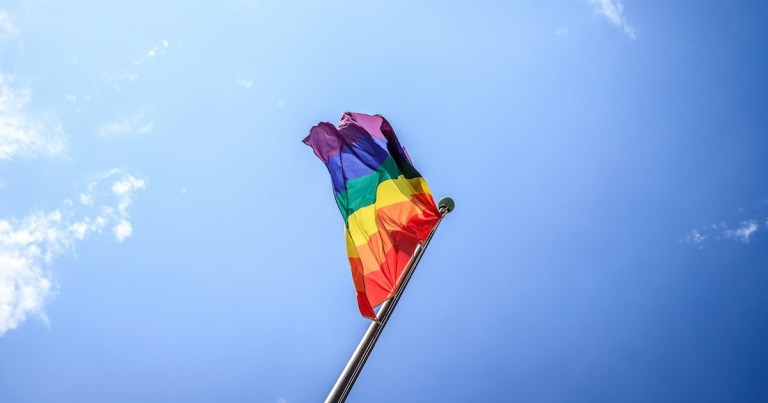
Pride week/month used to mean rainbow logos appearing across LinkedIn and company websites without much hesitation. These days, fewer organisations are doing it – some have quietly stepped back, wary of political backlash or accusations of performativity either way.
That hesitation is itself worth noticing. But whether or not a logo changes, for many LGBTQ+ employees, what matters even more is what the day-to-day experience inside the organisation actually looks like.
The data is worth sitting with. According to research from Stonewall (2025), two in five LGBTQ+ employees still feel they need to hide who they are at work. Nearly a third say they wouldn’t feel comfortable reporting discrimination if they experienced it. In Denmark, a joint report from LGBT+ Denmark and the Boston Consulting Group found that 81% of LGBT+ employees had experienced or witnessed discriminatory behaviour at work within a two-year period.
These numbers aren’t outliers. They’re patterns – and they’re showing up in organisations that would describe themselves as doing okay on inclusion.
So where’s the gap?
The gap is often in the everyday
Most people aren’t showing up to work looking to exclude anyone. The challenge isn’t intent. It’s the accumulated weight of small moments – the language that’s slightly off, the assumptions that go unchecked, the silence when someone expects acknowledgment.
A Danish study found that 21% of LGBT+ people reported experiencing demeaning comments or jokes about their sexual orientation, body, or gender identity within the past year. The proportion is notably higher among transgender and non-binary individuals. For comparison, only 1% of non-LGBT+ respondents reported the same. That gap is telling. It suggests that the problem isn’t random – it follows a pattern, and that pattern is predictable and, importantly, addressable.
Language is one of the most accessible places to start.
What inclusive language actually means (and doesn’t)
Inclusive language isn’t about walking on eggshells or memorising an ever-changing rulebook. At its core, it’s about not making unnecessary assumptions about the people you work with.
A few practical examples that are easier to adopt than most people expect:
Partner, not wife or husband. When you automatically ask a male colleague what his “wife” thinks, or reference a female colleague’s “boyfriend,” you’re making an assumption. “Partner” is specific to no one and excludes no one.
Parental leave, not maternity or paternity leave. This one matters beyond LGBTQ+ inclusion – it also reflects the reality of single parents, adoptive parents, and families that don’t map neatly onto a two-gender model.
Colleagues, team, or everyone – not ladies and gentlemen or guys. Small swap. Real effect for anyone who doesn’t neatly identify with either label.
Pronouns. If you’re unsure, it’s fine to ask privately and simply: “What pronouns do you use?” What’s less helpful is assuming – or worse, correcting someone in public after getting it wrong. If you make a mistake, acknowledge it, correct it, and move on without making it a bigger moment than it needs to be.
None of this requires a full training overhaul before you can get started. Most of it just requires pausing for a second before you default to habit.
Why this is also a business argument
Christina Ottsen, PhD, and Sara Louise Muhr, professor of Diversity & Leadership at CBS, make the case in Biasbevidst Ledelse that a diverse workforce strengthens organisations in three concrete ways: financially, through access to a broader range of ideas and perspectives; strategically, by drawing from the full talent pool; and politically, through the social responsibility that comes with genuinely inclusive practices.
Stonewall’s research backs this from the retention side: one in four LGBTQ+ people has left a job because they didn’t feel accepted. That’s a measurable cost – recruitment, onboarding, lost institutional knowledge – that shows up nowhere in the discrimination incident log, but shows up clearly in the numbers.
And when things go right? Employees who feel safe to be themselves at work are more engaged and more productive. That’s not a soft claim – but consistently documented.
What HR and People leaders can actually do
A few things that move the needle, beyond the logo:
Audit your language touchpoints. Job postings, benefits packages, onboarding documents, email templates – read them as if you were a non-binary person or someone in a same-sex relationship. Where are the assumptions? Fix those first.
Include inclusive language in job descriptions. Writing inclusively isn’t easy – but with science-backed AI like Develop Diverse, it gets easy. You’ll get more qualified candidates (we have data on this) and improve your employer brand.
Make anti-discrimination policy real, not decorative. Many organisations have the policy. Fewer have created the conditions where someone actually feels safe using it. That gap – between policy on paper and culture in practice – is where exclusion lives.
Create space for visible allyship at leadership level. If senior leaders only engage with inclusion topics in a corporate context, it signals that being yourself is fine in theory but career-limiting in practice. Where leaders are out and comfortable sharing that, and where they make space for it, others notice.
Normalise pronoun sharing without mandating it. Email signatures, meeting introductions, Slack profiles. Make it an option that’s clearly accepted rather than a requirement that feels invasive.
When you get something wrong – and you will – handle it well. A short, genuine acknowledgment (“I used the wrong term – I’ll do better”) is more powerful than a lengthy apology that makes the incident about you. Don’t dwell. Don’t repeat it.
A word on this particular moment
It would be dishonest not to name the broader context. Across several countries, there’s political pressure to roll back DEI commitments. Some organisations are quietly doing exactly that.
This is worth pausing on – not from a political standpoint, but a practical one.
The youngest segment of the workforce is the most LGBTQ+ in recorded history. UK data from the ONS shows that more than one in ten people aged 16 to 24 now identify as lesbian, gay, or bisexual. That cohort is entering the labour market now. They are paying close attention to where organisations stand – not in June, but in February, September, and March.
The organisations that are building reputations as genuinely safe places to work will have a meaningful advantage in attracting and retaining that talent. The ones that treated inclusion as a logo exercise will find that out the hard way.
The simplest possible framing
Workplace inclusion isn’t about getting everything right from day one. It’s about taking it seriously enough to keep improving.
Language is a good place to start because it’s visible, it’s changeable, and it signals something real about what an organisation actually values. A single thoughtless comment doesn’t define a culture. But the absence of any response to it might.
Pride Month is a useful prompt. But the work is a year-round thing – and it starts with the words we use on an ordinary Tuesday in October.
Sources: Stonewall Workplace Equality Index research (2025); LGBT+ Denmark & Boston Consulting Group workplace report; Ottsen & Muhr, Biasbevidst Ledelse (2021); FIU equality: 8 steps to an LGBT+ equal workplace; Danish LGBT+ population survey data.